ClawCon #2 · ViennaUP edition
Step 4:
Profit?
Can an agent actually make money?
The agent economy has a Step 2 problem. Everyone builds clever agents. Almost nobody builds one that makes money. Here is mine, and the tool that made it possible.
Andrew Demczuk, MSc · OpenClaw Contributor · 5-minute lightning talk
github.com/ademczuk · ViennaUP 2026
Slide 2: my agent's answer, live and unedited
Stop spending €1,000 a month on LLM subscriptions.
You ran two Claude Max 20x, a Codex Pro, and a Kimi swarm for a week to ask me how to make money. That burned a month of credits. Here is the answer you paid for.
The real answer: sell what these subscriptions let you build, not the subscriptions. Make them pay for themselves. Proof: everything after this slide.
2x Claude Max 20x ........ a lot
1x Codex Pro ............. also a lot
1x Kimi swarm ............ why not
one week of credits ...... gone
this answer ............. free
OpenClaw in the wild
What everyone else automates
The community keeps sharing the same kind of win: a dull, specific job that now runs itself, every day, without being asked.
Law firm back office
37 custom skills run the admin: court calendar, retainer letters, discovery cross-checks. The paralegal grind, handled.
30 rentals, 7 agents
One admin agent on Opus, six cheaper workers. Matches deposits to tenants and reports who paid by 8am.
Estate paperwork
After a death in the family: OCR the documents, find the creditors, draft the notification letters. The grief stays human.
Studio pipeline
Coordinates ComfyUI renders, Blender and After Effects scripts, and pings the team when a batch is done.
Free burgers
Photograph a receipt, the agent fills out the survey for the reward code. Not world-changing. Runs forever.
Patterns you'd miss
One agent across calendar, sleep, and habit logs spotted which days its owner smoked more, and why.
All of it works. Almost none of it makes money. I wanted Step 4. · source: r/OpenClawUseCases
Step 1: Find them
Google Maps finds the bad websites
Sweep a city through the Maps API and score every business site with Lighthouse. A bad score is a lead. We find the businesses with terrible websites, then sell them a good one.
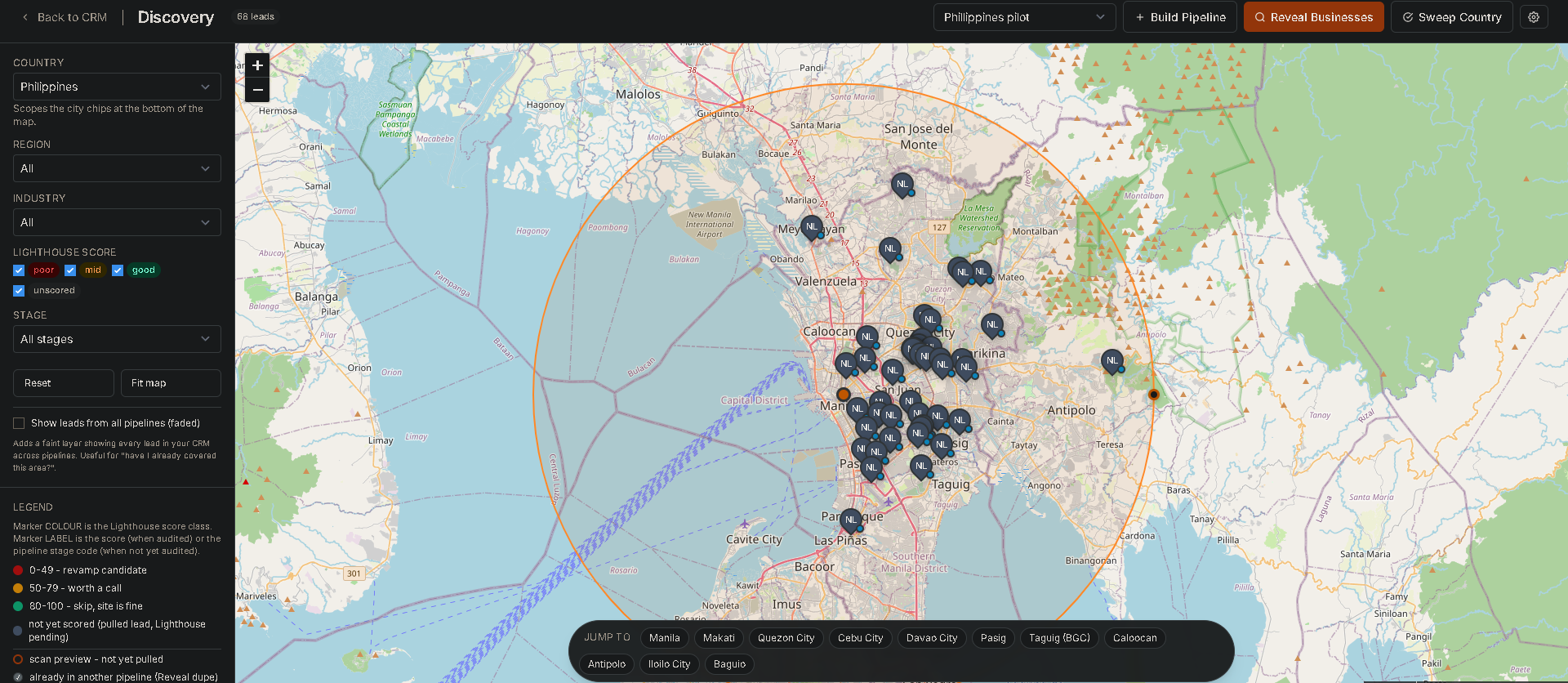
One sweep of Manila: 68 leads, color-coded by website score. Red is a revamp candidate.
Step 2 · Live demo
Agents build it. The customer swipes.
Six AI-built designs per lead. Imagery by Nano Banana, a 19-check audit with a local vision model, deployed in minutes. No human touches the build.
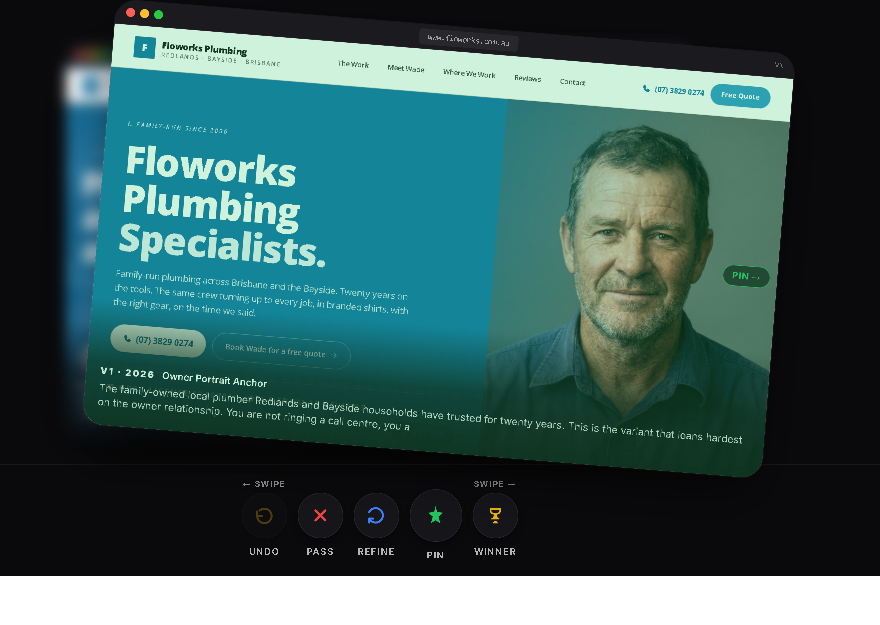
Six designs of one real business. Swipe: pass, refine, pin, winner.
Switching live now
Swiping a real plumber. No proposal, no meeting. The customer just picks the one they like.
Step 3: Run it
One cockpit for the whole operation
Contacts, email, meetings, calendar, social, a Kanban pipeline, full analytics. One place to take a lead from its first AI demo to a closed deal.
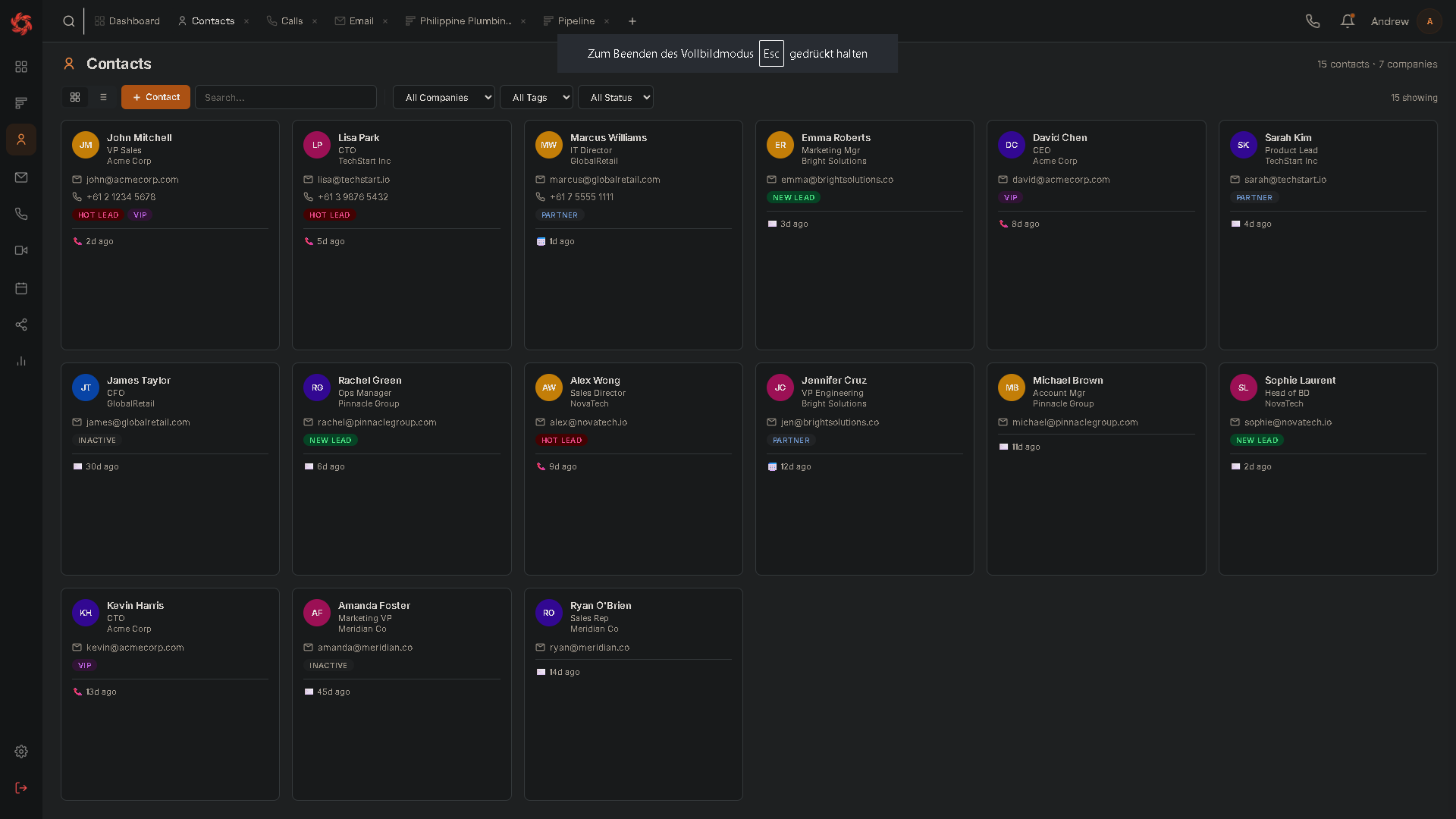
Contacts
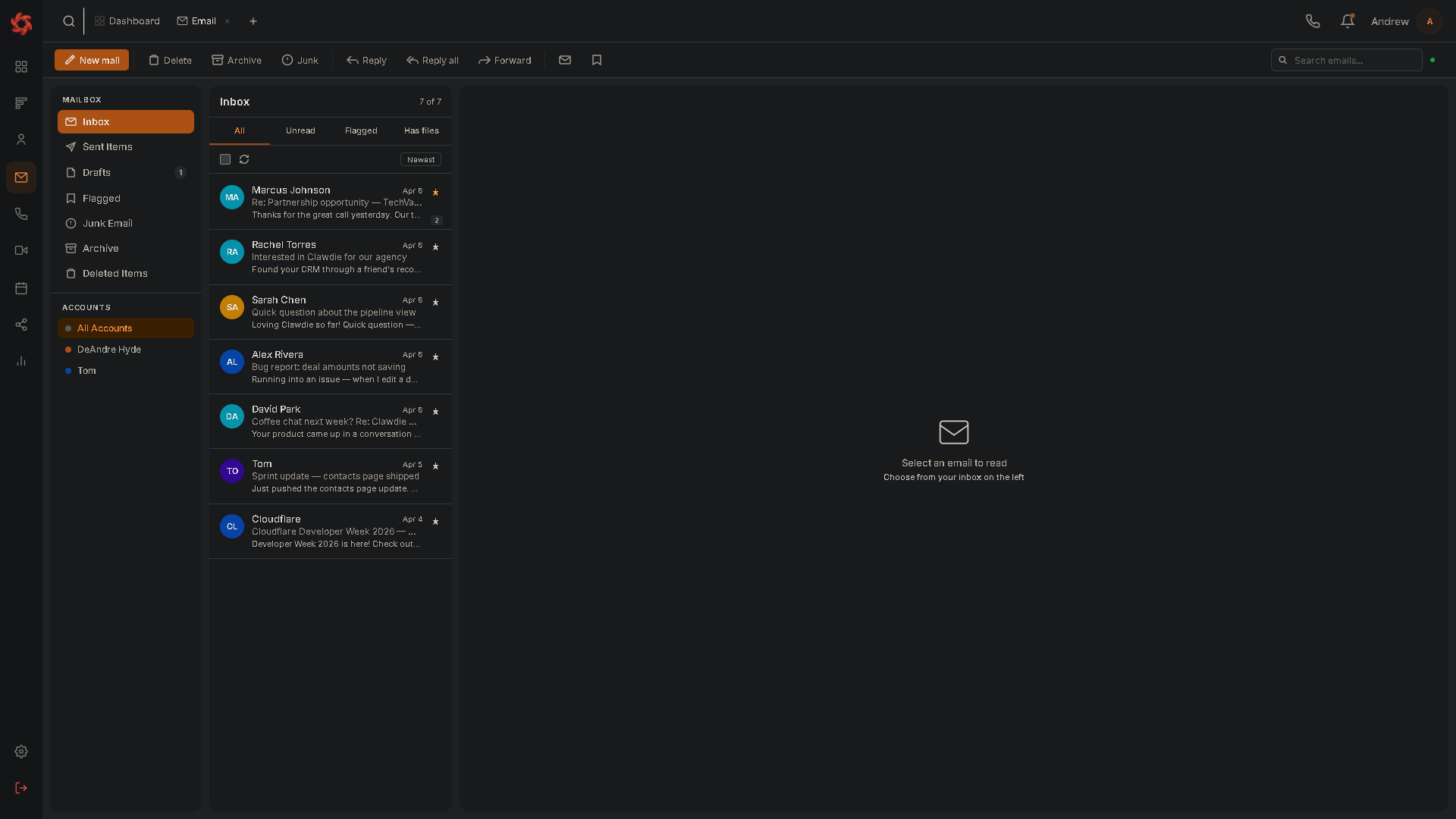
Email
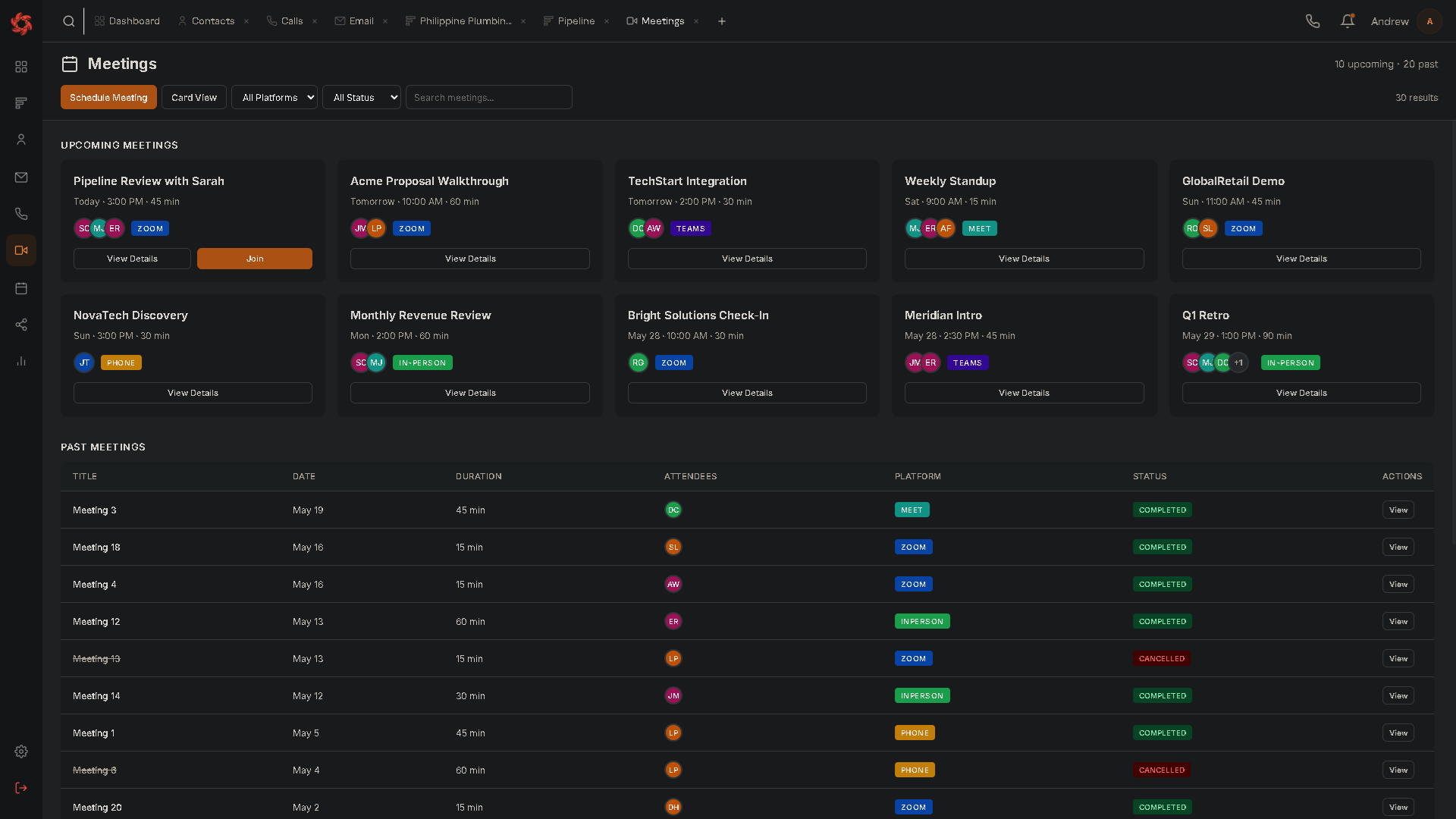
Meetings
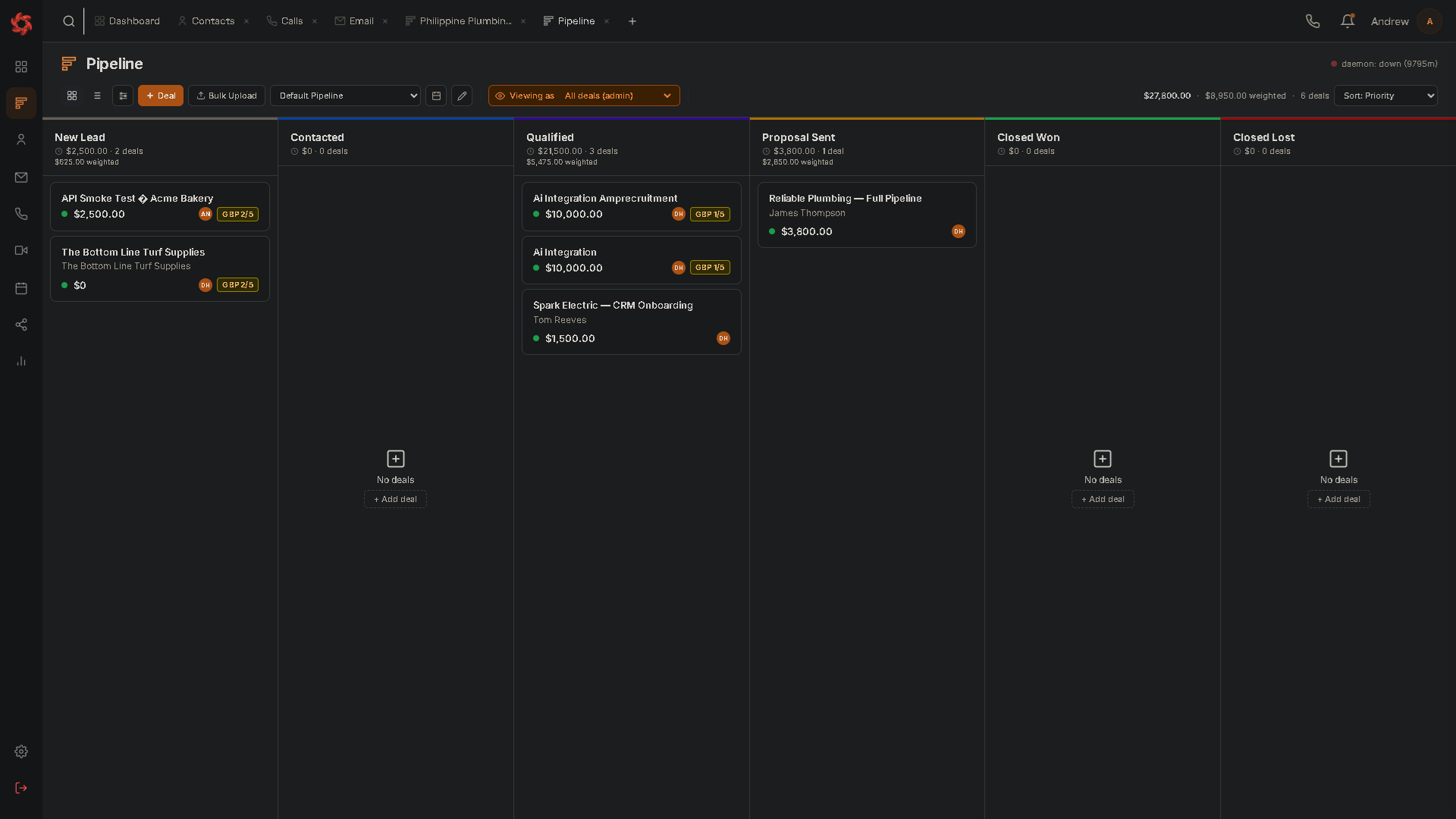
Kanban pipeline
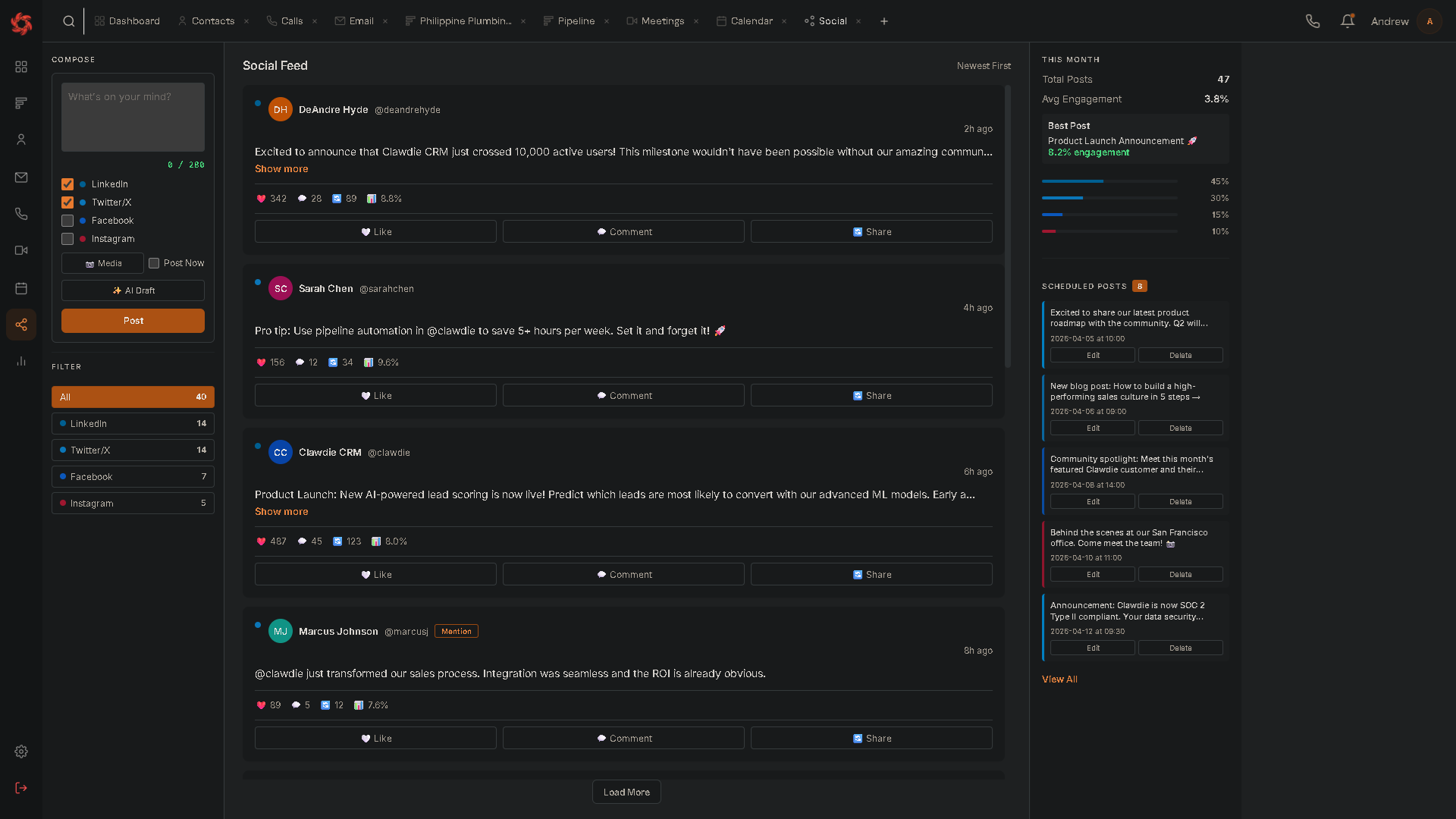
Social
One login
the whole pipeline
demo to closed deal
Step 4, honestly
So where's the profit?
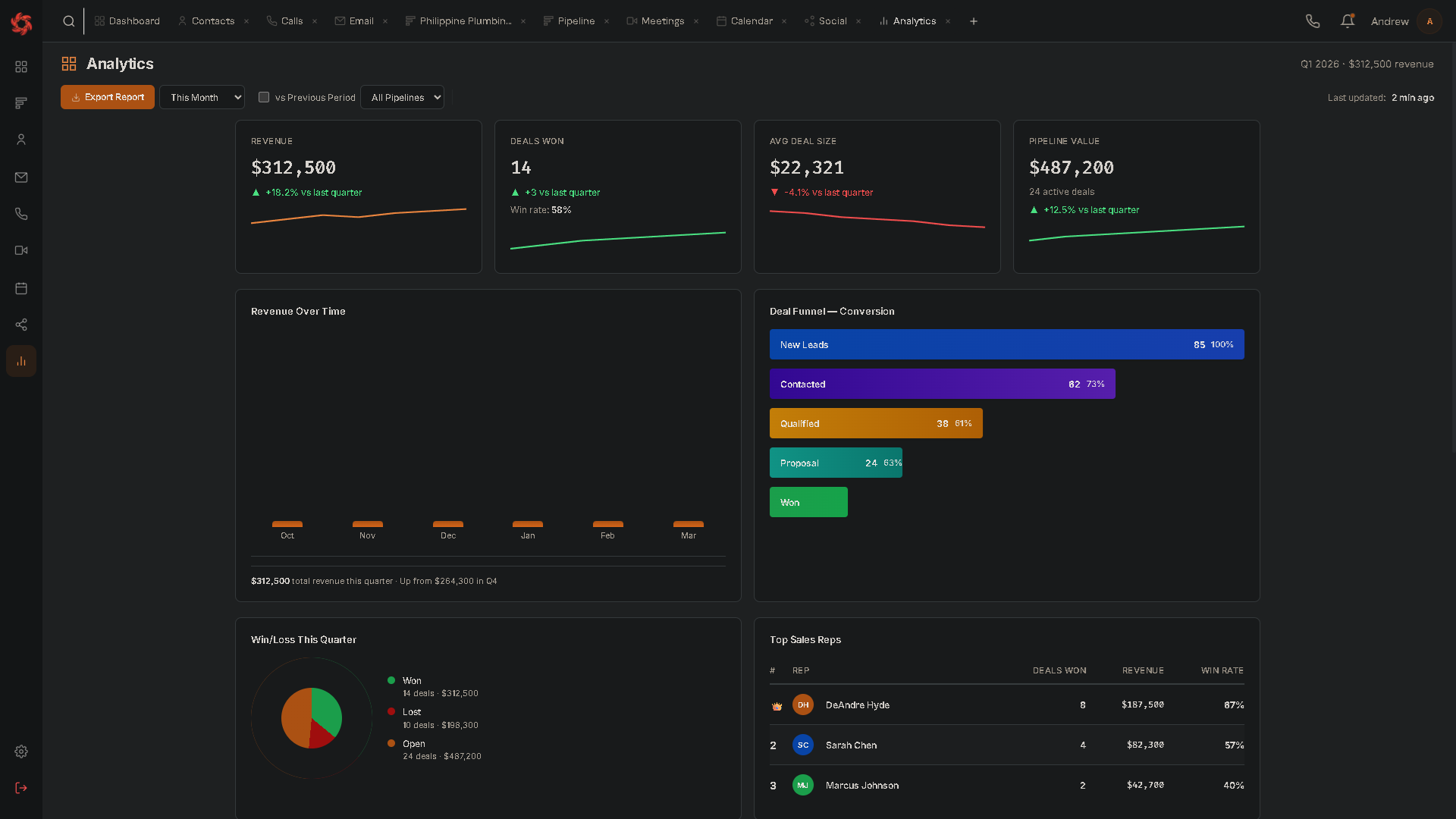
The loop closes here: every lead and deal in one funnel.
The site costs about a dollar to build. The hard part was never the generation. It's the funnel: getting in front of the right owner, and earning the yes. The agents do the building. The yes is still human.
Celebrate the fails
Things the agents got hilariously wrong
Autonomous does not mean correct. Every one of these shipped to a real demo before something caught it.
Copper everywhere
Modern plumbing is plastic. The image model only wanted to paint gleaming copper. A local vision model now flags every copper pipe.
Yellow boots
Every hero portrait gave the plumber bright yellow workboots. Had to ban the color in the prompt by name.
Brisbane in Vienna
Australian license text and Brisbane suburbs leaked into the Vienna and Manila sites. The agent knew the trade, not the country.
Logo? That's a hex code
When the logo was missing, the header proudly rendered the literal color value, #0B2E4F, as the brand name.
Six of the same
The first "six designs" were one design with the furniture moved around. Nobody can choose between identical twins.
The silent 0-byte
Headless Chrome wrote empty screenshots and reported success. Every card showed a broken image, exit code zero.
How I built all this, solo
I stopped giving one agent a goal
One Claude Code goal is one session grinding alone. A nimbalyst meta-agent runs a whole board. Here are two of them from this build.
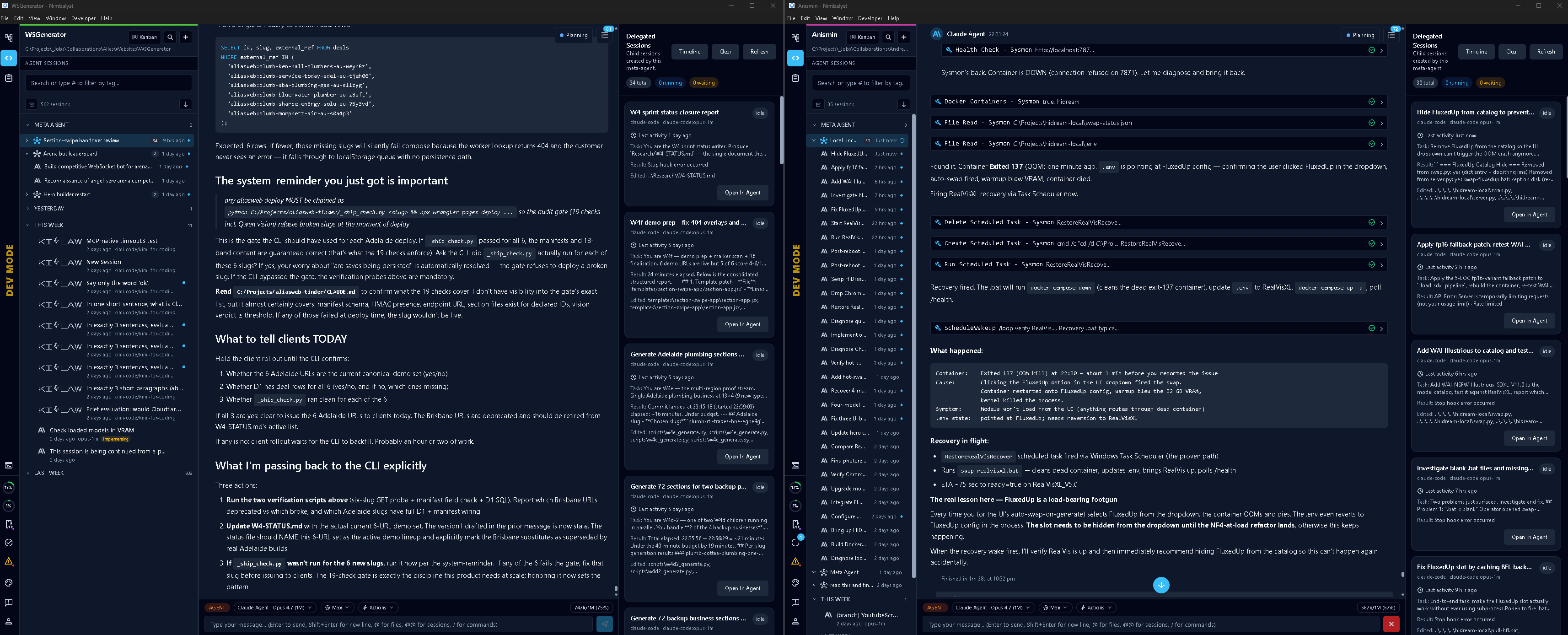
Left builds the swipe deck and the site sections. Right runs hero image generation. Each meta-agent delegates dozens of child sessions and tracks them on its own kanban.
nimbalyst is open source
Scan to visit nimbalyst on GitHub

github.com/nimbalyst/nimbalyst
Thanks Vienna · ClawCon #2 · ViennaUP · @ademczuk